The Quiet Renaissance of Natural Dyeing
From Marseille's textile workshops to the hills of Provence, a new generation of makers is pulling colour back from the soil.
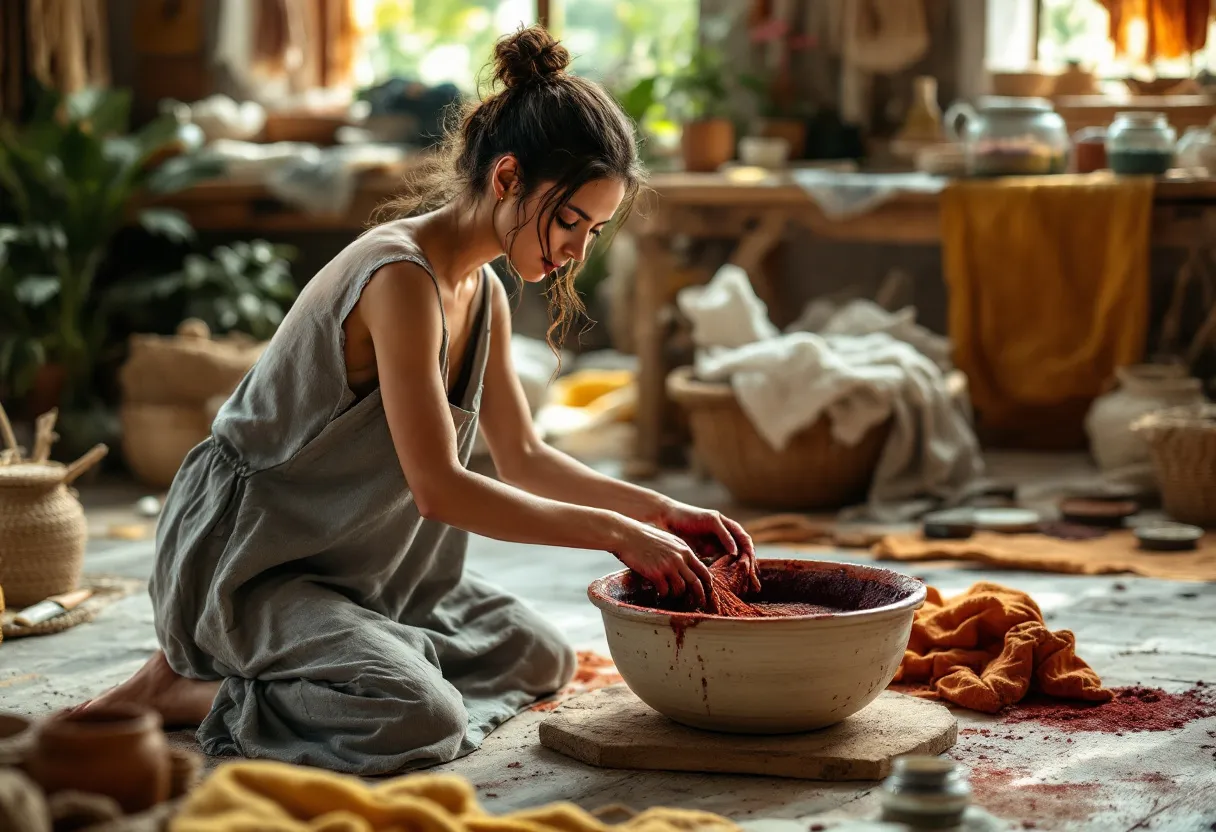
Colour, before the industrial era, was an argument with nature. Dyers spent careers learning which plants, minerals, and insects could be coaxed into surrendering their pigment, and how to convince that pigment to bond permanently with fibre. Madder root for red. Weld for yellow. Woad, then indigo, for blue. The results were not always predictable. They were always alive in a way that synthetic dye cannot quite replicate.
That aliveness is precisely what is drawing a new generation of textile artists back to natural dyeing. In workshops from the Quartiers Nord of Marseille to farmhouses in the Luberon, makers who might have trained in fashion or graphic design are instead growing dye gardens, maintaining mordant baths, and spending entire days in pursuit of a particular green that exists nowhere in a commercial colour system.
What Synthetic Dye Made Us Forget
William Perkin's accidental discovery of mauveine in 1856 changed cloth forever. Suddenly, colour was cheap, consistent, and available at industrial scale. It also became disconnected from place. A synthetic dye produces the same result in a factory in Bangladesh as in a studio in Lyon. Natural dyeing, by contrast, is entangled with geography, the same plant species grown in different soils, processed in different water, will produce different colours. The dyer becomes a translator between landscape and fabric.
This site-specificity is part of the appeal. Natural dyers speak about colour the way winemakers speak about terroir: as something that carries information about where it came from. A silk scarf dyed with sumac from the Provence scrubland carries, in some molecular sense, that particular light and that particular soil.
A Practice Anyone Can Begin
You do not need a workshop or specialist equipment to begin. Onion skins, the papery outer layers you normally discard, produce a rich gold on wool or cotton with minimal preparation. Avocado pits and skins give unexpected pink tones. A dye pot, a mordant bath of alum, and an afternoon of patience are enough to make something that no synthetic process would produce exactly the same way twice.
The imprecision is the lesson. Natural dyeing teaches you to negotiate with materials rather than command them, and what you get back is colour with a particular warmth, a quality that has everything to do with where it came from.