My Mother's Kitchen Was a Country of Its Own
A first-person meditation on how the food we grow up eating becomes a geography we carry inside us long after we've left home.
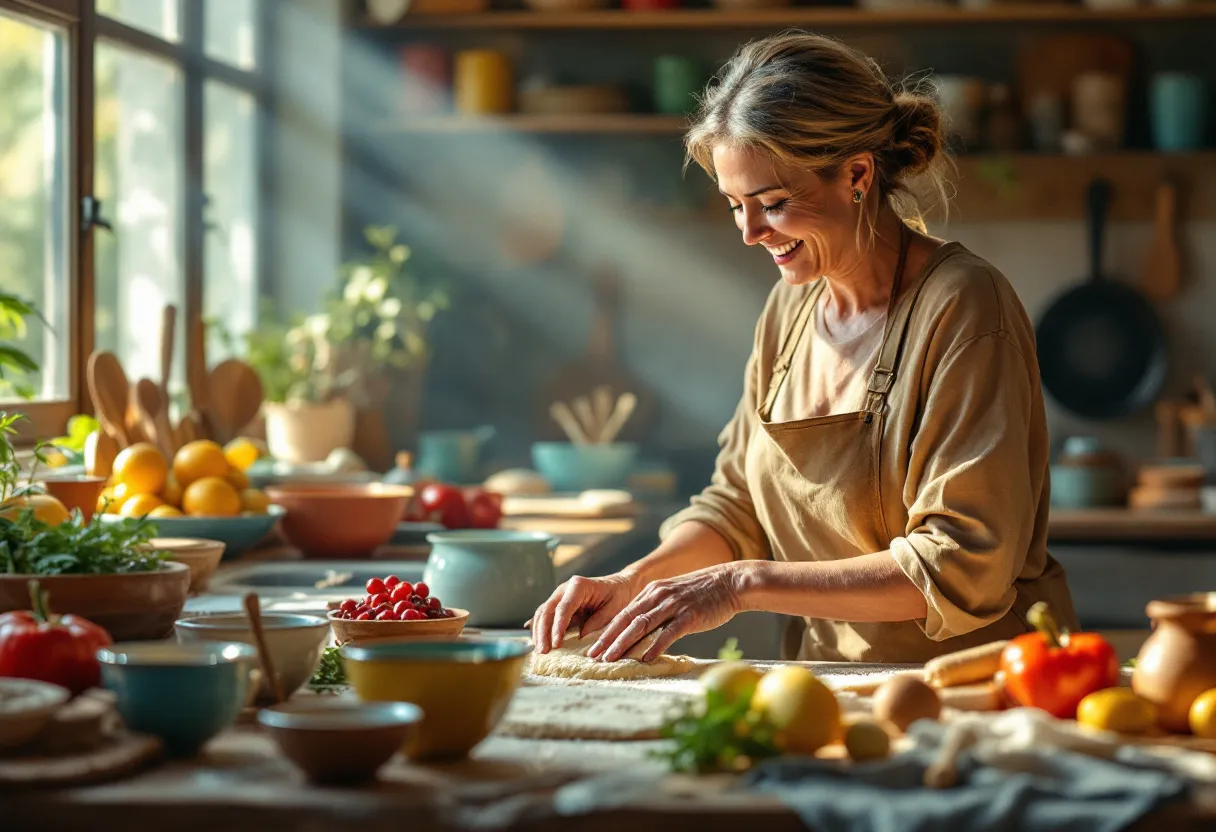
My mother made harira every Friday without variation. The smell, tomato and coriander and lemon, the faint sweetness of cinnamon, would arrive in my bedroom before I was fully awake, and I would lie there for a moment in the particular comfort of knowing exactly where I was and who I belonged to. I did not understand then that I was being given something I would spend my adult life trying to reconstruct.
I have lived in Marseille for eleven years now. The city is generous with its food cultures, the market at Noailles alone contains enough olfactory memory to make you homesick for countries you have never visited. But homesick is precisely what I am, in the most literal sense: sick for a home that exists now only in my body, in the muscle memory of a recipe I watched without ever formally learning.
What We Inherit Without Asking
Food anthropologists talk about flavour memory as one of the most durable forms of cultural transmission. The taste preferences we develop before age ten are extraordinarily persistent. They shape what we find comforting, what we crave under stress, what we reach for when we need to feel like ourselves again. Migration makes this visible in ways that are sometimes painful: you discover that you are, in part, a cuisine.
For many of us who grew up between cultures, our mother's kitchen was a jurisdiction. A place where one set of rules applied, language, rhythm, hierarchy, flavour, that was distinct from the world outside the door. Losing that jurisdiction to distance or death or simply the passage of time can feel like losing a citizenship you did not know you held.
Learning to Cook as an Act of Grief and Love
I started cooking my mother's recipes seriously in my thirties, mostly from imperfect memory and long phone calls and occasional disaster. What I found was that the process was as important as the result. Standing over a pot at seven in the morning, adjusting spices by smell rather than measurement, I was somewhere between here and there, then and now.
The harira I make today is not my mother's. It is mine, which is to say it is hers filtered through everything that has happened since. That feels, on most days, like enough. On some days, it feels like abundance.