Marseille's Muralists Are Rewriting the City from the Ground Up
Forget the gallery circuit, the most urgent contemporary art in France's oldest city is happening on walls, stairwells, and sun-bleached shutters.
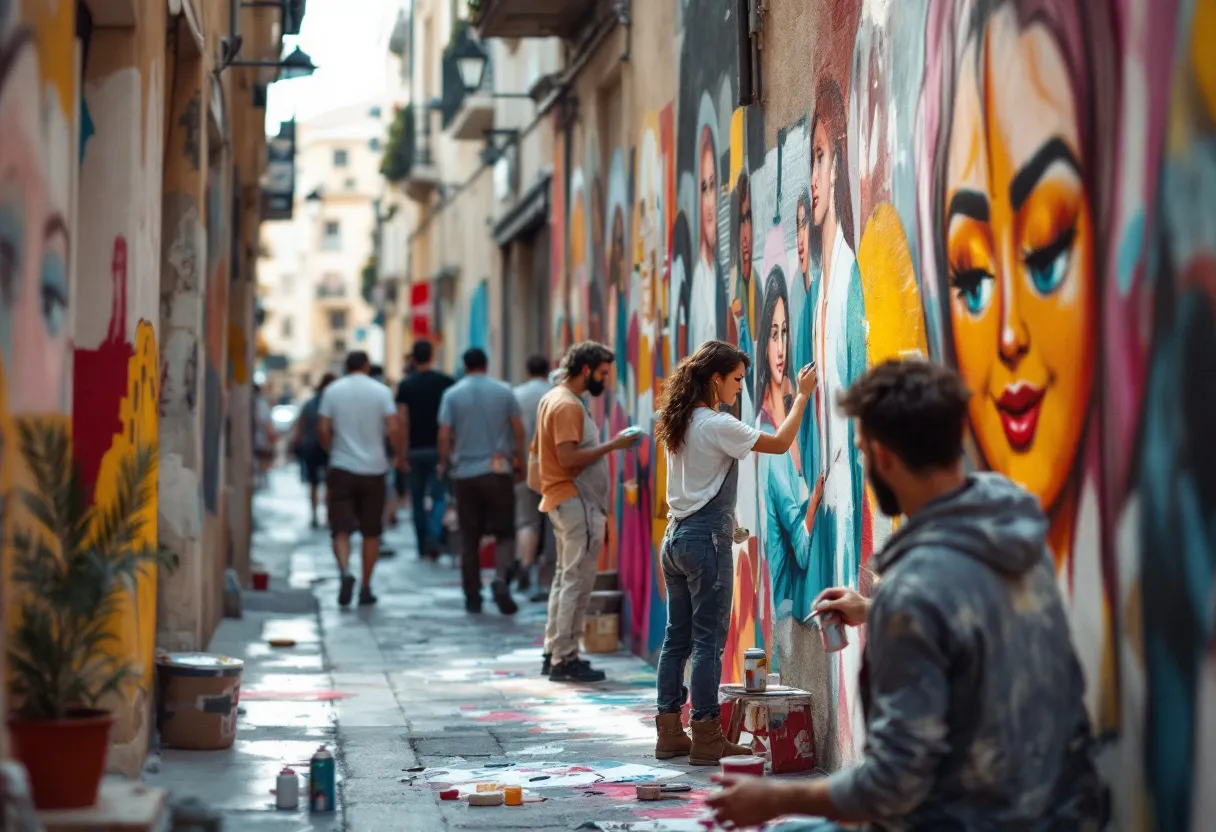
Walk up through Le Panier on any given morning and the city reveals itself in layers. Byzantine church, Ottoman influence, pied-noir pastry shop, then, turning a corner, a ten-metre-high portrait of an elderly woman in a headscarf, rendered in ochre and cobalt, looking out over the Vieux-Port with an expression of absolute authority. Nobody commissioned it for a museum. It simply appeared, and now it belongs to the neighbourhood.
Marseille has always been a city that happens outside. Its identity was forged on docks and in markets, in languages that overlapped and sometimes clashed. Street art found fertile ground here precisely because the city never prioritised its own respectability. There was wall space. There was a population with something to say. There were artists arriving from across the Mediterranean who brought traditions of geometric pattern and calligraphy that European street art had barely encountered.
Beyond Tagging: A Visual Language with Deep Roots
What distinguishes the most compelling work emerging in Marseille's northern arrondissements is how consciously it draws on heritage. Zellij tilework from Morocco. Henna patterns from Algeria. Coptic textile geometry from Egypt. These are not decorative references, they are assertions of cultural legitimacy in spaces where that legitimacy has historically been contested. When a young artist from the Castellane neighbourhood paints her grandmother's village motifs sixty feet high, she is doing something archival as well as aesthetic.
The conversation between old walls and new images is also, always, a conversation about who gets to define beauty in public space. Muralism at its best does not decorate a neighbourhood, it argues for it.
Finding It Yourself
The best approach is unhurried and unplanned. Start at the top of the Cours Julien, where the density of work is highest, then let the streets pull you north. Bring water. Wear shoes you can walk in for four hours. The work changes seasonally, a wall painted in spring may be painted over by autumn, and something entirely unexpected will have taken its place.
That impermanence is part of the point. Street art in Marseille is not trying to last forever. It is trying to say something true right now, to the people who live here, on the walls that belong to everyone.